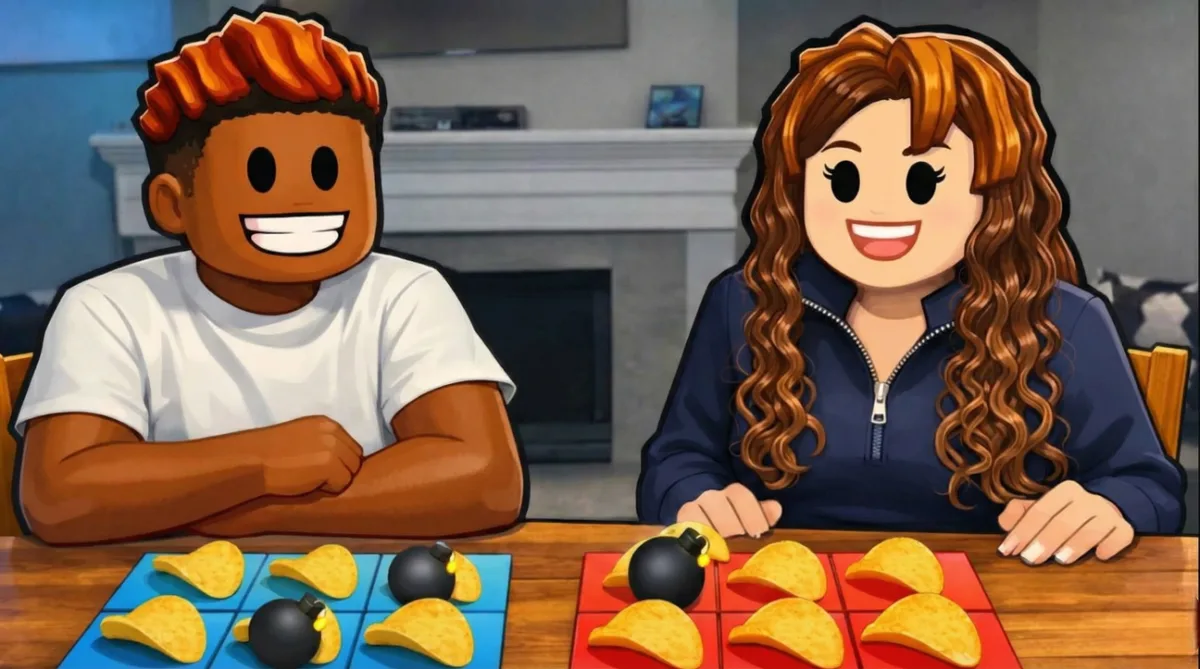
Bomb Chip is a psychological warfare game disguised as a party game. You hide bombs in chips, your opponent picks which ones to eat, and one wrong choice ends the round.
The game is trending on Roblox right now, and for good reason. It's simple to learn but the mind games get deep. I've played about 50 matches and picked up some patterns that separate winners from losers.
This guide covers how to play, bomb placement strategies, and how to read your opponent's moves.
How Bomb Chip Works
Two players face off with 12 food items each. You secretly place bombs in some of your items. Then you take turns picking items from your opponent's board to "eat."
Pick a bomb? You take damage. Lose all your health? You lose the round.
The twist: you're also watching your opponent pick from YOUR board. Every choice they make tells you something about how they think.
Basic Rules
| Element | Details |
|---|---|
| Players | 2 |
| Items per player | 12 food items |
| Bombs to place | 3 (varies by mode) |
| Goal | Make opponent eat all bombs |
| Win condition | Opponent loses all health |
Matches are quick. Most rounds last 2-3 minutes. The game rewards pattern recognition and psychological reads over mechanical skill.
How to Start a Match
- Join Bomb Chip on Roblox
- Walk to the game table in the lobby
- Interact with it to queue up
- Wait for another player to join
- Place your bombs when the round starts
- Take turns picking chips
You can also invite friends directly for private matches.
Bomb Placement Strategies
This is where the game gets interesting. Where you put your bombs determines how the round plays out.
The Spread Strategy
Place bombs evenly across the board. One on the left, one in the middle, one on the right.
Why it works: Opponents can't avoid bombs by sticking to one area. No matter where they pick, they're at risk.
Why it fails: Predictable. Experienced players expect this and will test multiple areas early.
The Cluster Strategy
Put all three bombs next to each other in one section.
Why it works: If your opponent avoids that area, they survive. But if they hit one bomb, they'll likely hit more. High risk, high reward.
Why it fails: One lucky pick in the safe zone and they've cleared most of your board.
The Corner Trap
Place bombs in corners and edges where players pick last.
Why it works: Most players start in the middle. Corners feel "safe" so they save them for later. By then, they've committed to a pattern.
Why it fails: Smart players know this trick and test corners early.
The Reverse Psychology
Put bombs in the most obvious spots. Dead center. First row. Places that scream "trap."
Why it works: Players overthink. "It's too obvious, must be safe." Then boom.
Why it fails: Against beginners who don't overthink, they'll just pick the obvious spot and lose.
Reading Your Opponent
Half the game is watching how your opponent picks from your board.
Fast Pickers
Players who pick quickly aren't thinking strategically. They're going on instinct. Against these players, use unpredictable placement. Random beats instinct.
Slow Pickers
Players who hesitate are analyzing. They're looking for patterns. Against these players, break your own patterns. If you always spread bombs, cluster them. Keep them guessing.
Pattern Pickers
Some players pick in obvious patterns. Left to right. Top to bottom. Corners first. Once you spot their pattern, place bombs in their path.
Reactive Pickers
These players change strategy based on results. Hit a bomb? They avoid that area. Safe pick? They stay in that zone. Feed them false confidence, then punish.
Advanced Tips
Watch the timer. Some players rush when time is low. If you're ahead, let the clock pressure them into mistakes.
Count the bombs. Track how many bombs your opponent has left. If they've placed 3 and you've found 2, you know there's only 1 left. Adjust your risk tolerance.
Bluff with reactions. When your opponent picks from your board, your reaction matters. Look nervous when they pick safe spots. Look calm when they're near bombs. Mess with their reads.
Learn from losses. Every loss teaches you something. Did they cluster? Spread? Use corners? Adapt for the rematch.
Quests and Progression
Check the upper right corner for daily quests. These refresh regularly and reward cash.
Common quests include:
- Win X matches
- Play X rounds
- Make opponent eat X bombs
Cash buys cosmetic skins and effects. Nothing affects gameplay, so don't stress about grinding unless you want to look cool.
Game Modes
Bomb Chip has different modes that change the rules:
Classic Mode - Standard 3 bombs, 12 items. Best for learning.
Quick Mode - Fewer items, faster rounds. Good for warming up.
Custom Mode - Adjust bomb count and item count. Great for practicing specific strategies.
Check the lobby for available modes. Some rotate or unlock at certain levels.
Common Mistakes
Placing bombs in the same spots every game. Your opponent will catch on. Mix it up.
Picking too fast. Take your time. Watch your opponent's reactions. Information wins games.
Ignoring quests. Free cash for playing normally. No reason to skip them.
Tilting after losses. Bad beats happen. The bomb placement that worked 10 times will fail eventually. Stay calm, adjust, keep playing.
FAQ
How many bombs do I place in Bomb Chip?
Usually 3, but it varies by game mode. Check the mode description before starting.
Can I play Bomb Chip solo?
No. It's a 2-player game. You need an opponent to start a match.
Is Bomb Chip pay to win?
No. All purchases are cosmetic. Skill and psychology determine winners.
How do I get better at Bomb Chip?
Play more matches. Watch how opponents place bombs. Experiment with different strategies. Learn to read hesitation and confidence.
Related Content
- Bomb Chip Codes - Free rewards when available
- Dandy's World Codes - Another trending party game
- Dead Rails Codes - Survival multiplayer